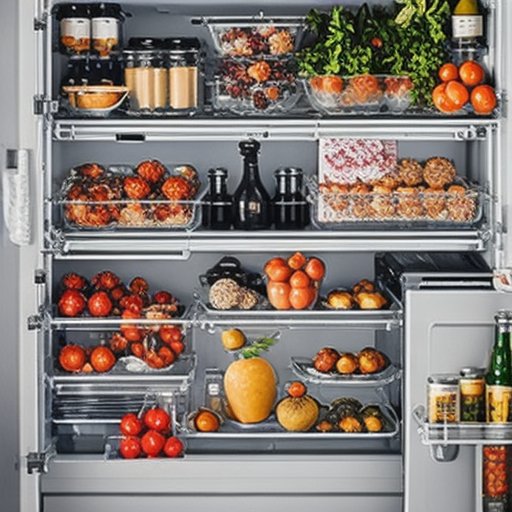
Prepare the refrigerator the day before your guests arrive: take inventory, clear a shelf for serving dishes, check that the centre of the fridge is around 4°C, and set aside clean containers for leftovers. If drinks take up most of the space, a separate cooler keeps the appliance from becoming overcrowded and its door from being opened throughout the evening.
The day before: clear space without wasting food
Start with bulky packaging, nearly empty bottles and leftovers that need to be eaten or frozen. Check dates carefully: a use-by date is about safety, whereas a best-before date concerns quality and does not make a properly stored, intact product automatically inedible once the date passes.
Put food that should be eaten first on a visible shelf. Do not leave perishable items on the worktop merely to gain room. Move products that do not require refrigeration to a suitable cupboard instead.
Reserve a zone for each purpose
Plan the layout before cooking:
- a stable shelf for prepared dishes and desserts;
- a low zone for raw meat or fish, in closed containers that prevent drips;
- an “eat first” box for opened products;
- clear space for leftovers after the party.
Leave room around air outlets and large dishes. A fridge packed tightly enough to block circulation cools less evenly. Our guide to the ideal temperature in each refrigerator zone explains where different foods belong.
Chill drinks without blocking the fridge
Bottles and cans are bulky, and guests repeatedly open the door to collect them. For a large gathering, use a clean cooler with cold packs or bagged ice. Keep only the next batch of drinks in the fridge and refill it in small quantities.
Never place decorative lights, candles or electrical accessories that the manufacturer has not approved inside the appliance. Moisture, low temperatures and proximity to food make them unsuitable.
During the party: reduce door openings
Bring perishable dishes out when they are needed rather than hours in advance. Close the door fully and make drinks easy to find outside the fridge. A small sign pointing to the cooler can prevent prolonged searching.
Serve highly perishable dishes in smaller batches and replenish them from cold storage. Swiss food-safety guidance says that meat, poultry, fish and seafood should be kept below 5°C, and that perishable food and leftovers belong in the refrigerator.
Afterwards: deal with leftovers promptly
Use shallow, covered containers and add the date. Refrigerate food that is still safe without leaving it out throughout the clean-up, and freeze what will not be eaten soon. Food that has spent too long at room temperature or has been handled without control does not become safe again merely by being chilled.
Separate food that was served from dishes that stayed covered in the refrigerator. Our guide to storing leftovers properly covers containers, labels and reheating.
Quick checklist
- The centre of the fridge measures around 4°C.
- One shelf is clear for dishes and another space is reserved for leftovers.
- Raw products are closed and stored low down.
- A separate cooler is ready if there are many drinks.
- Clean boxes, lids and labels are available before guests arrive.
- No decorative light or unapproved accessory goes inside the appliance.
Source: Swiss Federal Food Safety and Veterinary Office — food hygiene guidance (French).